
Aperçu des sections
-
-
Les étudiants doiventMarquer comme terminé17.0 Mo
-
Ouvert : samedi 10 février 2024, 01:01Les étudiants doiventMarquer comme terminé
-
Les étudiants doiventMarquer comme terminé
تطبيق اندرويد مخصص لطلبة الإعلام
-
Les étudiants doiventMarquer comme terminé
-
Les étudiants doiventMarquer comme terminé
- محاضرات ودروس موجهة إلى طلبة السنة الثانية ليسانس علم المكتبات
- طبيعة الوحدة التعليمية: استكشافية
- السداسي الثاني
- الرصيد 2
- المعامل 01
- التقييم: امتحان كتابي
-
-
Les étudiants doiventMarquer comme terminéالمحاضرة 01 - نظريات الإعلام
-
Les étudiants doiventMarquer comme terminé
إعادة القراءة في المفاهيم الأساسية والعامة
-
Les étudiants doiventMarquer comme terminé
تقديم مقترحات وتصورات حول المدخل العام لنظريات الإعلام
فتح النقاش حول اهمية النظريات الإعلامية والاتصالية -
-
Les étudiants doiventMarquer comme terminé
موجود على تطبيق "MAZARI"
-
-
-
-
-
Les étudiants doiventMarquer comme terminé
نقاش عام حول المحاضر الثانية
-
Ouvert le : lundi 25 mars 2024, 00:00Les étudiants doiventMarquer comme terminé
سؤال حول مستقبل النظريات التقليدية للإعلام؟
-
-
-
-
Les étudiants doiventMarquer comme terminé
حلقة نقاش حول المحاضر الثالثة
-
Ouvert le : mardi 2 avril 2024, 00:00Les étudiants doiventMarquer comme terminé
مقارنة بين النمودج الاتصالي لدى ويفر وشانون والنمودج الاتصالي النسقي المقتوح
-
-
-
-
-
Ouvert le : mercredi 3 avril 2024, 00:00Les étudiants doiventMarquer comme terminé
اشرح النموذدج مع تقديم أمثلة تطبيقية من الواقع
-
-
-
-
-
Ouvert le : dimanche 7 avril 2024, 00:00Les étudiants doiventMarquer comme terminé
-
Les étudiants doiventMarquer comme terminé
نقاش بسيط حول النماذج الاتصالية القديمة
-
-
-
-
-
Les étudiants doiventMarquer comme terminé
تقديم إضافات وشروحات
-
Les étudiants doiventMarquer comme terminé
اشرح نموذج بيرلو وابحث عن وجوده في البيئة الرقمية
-
-
-
-
-
Ouvert le : vendredi 19 avril 2024, 00:00À rendre : mercredi 22 mai 2024, 00:00Les étudiants doiventMarquer comme terminé
-
-
-
-
-
Ouvert le : vendredi 19 avril 2024, 00:00Les étudiants doiventMarquer comme terminé
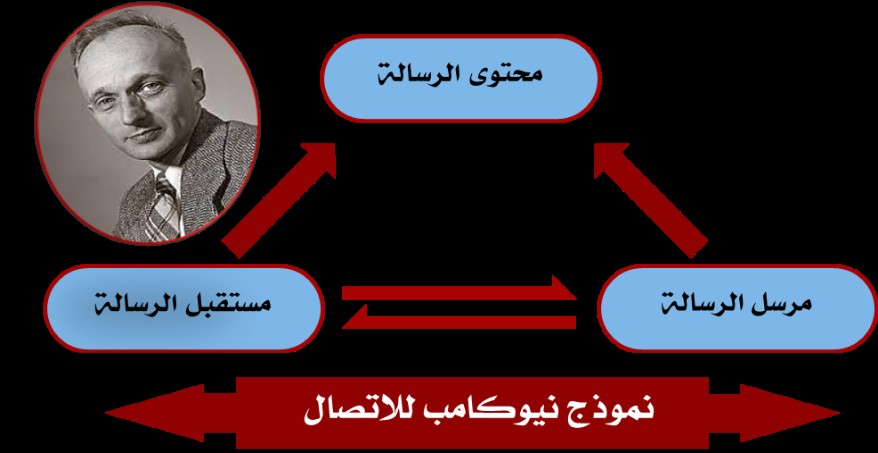
تقديم أمثلة تطبيقية حول نموذج الاتصال عند نيوكامب
-
-
-
-
-
-
Les étudiants doiventMarquer comme terminé
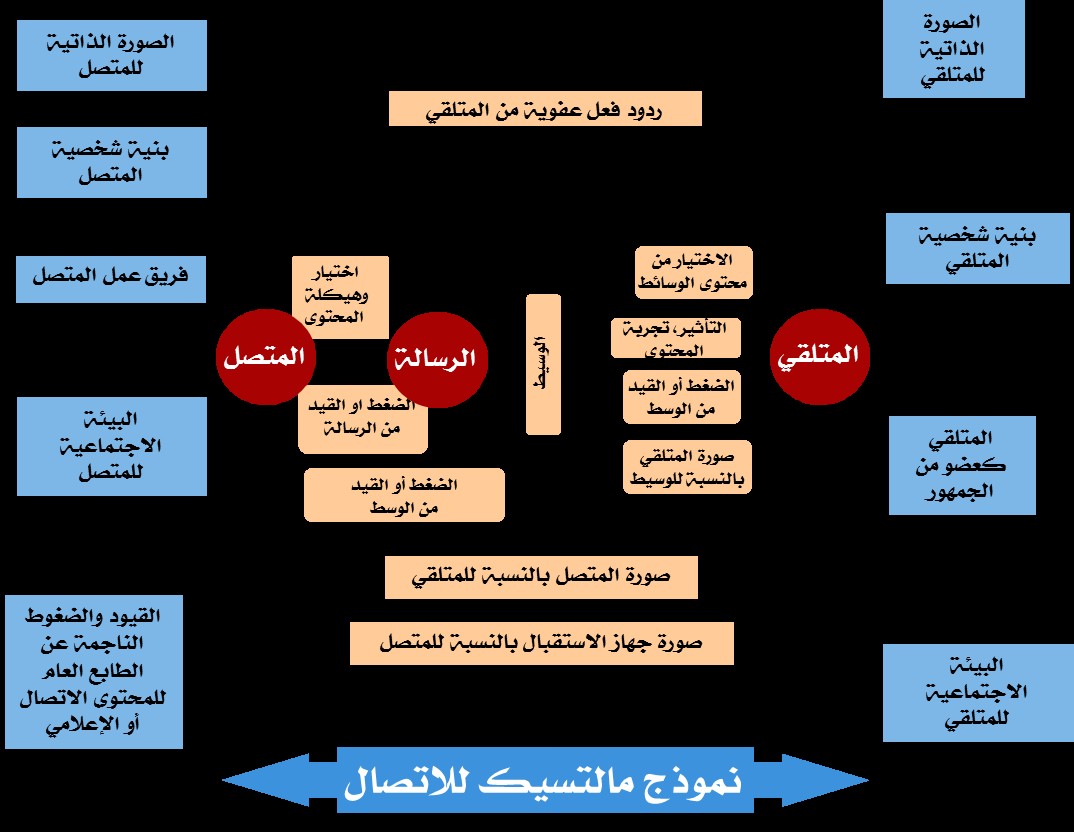
مخطط توضيحي للنموذج
-
Ouvert le : jeudi 25 avril 2024, 00:00Les étudiants doiventMarquer comme terminé
حول المخطط إلى نص مكتوب مقدما مثالا تطبيقيا
-
Les étudiants doiventMarquer comme terminé
منااقشة النماج الاتصالية الحديثة
-
-
-
-
-
Les étudiants doiventMarquer comme terminéنقاش حول نظريات التأثير (التأثير المباشر، المحدود المعتدل القوي)
-
Ouvert le : lundi 29 avril 2024, 00:00À rendre : mercredi 22 mai 2024, 00:00Les étudiants doiventMarquer comme terminé
كيف يمكن تفسير النظرية في البيئة الرقمية؟
-
-
-
-
-
Ouvert le : jeudi 2 mai 2024, 00:00Les étudiants doiventMarquer comme terminé
اشرح نظرية تدفق الاتصال عبر مرحلتين، ثم قدم نموذجين تطبيقين لذلك.
-
Les étudiants doiventMarquer comme terminé
حلقة نقاش حول النظريات الكلاسيكية للإعلام والاتصال
-
-
-
-
-
Ouvert le : dimanche 5 mai 2024, 00:00Les étudiants doiventMarquer comme terminé
قدم مقارنة بين نظرية الفجوة المعرفية ونظرية توهم المعرفة، ثم هات أمثلة تطبيقية من الواقع
-
Les étudiants doiventMarquer comme terminé
حلقة نقاش حول مستقبل النظريات الكلاسيكية للإعلام في ظل التحول الرقمي والذكاء الاصطناعي
-
-
-
-
-
Les étudiants doiventMarquer comme terminé
أهم النظريات الجديدة في عصر الإعلام الرقمي والإعلام الذكي
-
Ouvert le : mardi 7 mai 2024, 00:00Les étudiants doiventMarquer comme terminé
ما هو مستقبل الممارسة الإعلامية في عصر الذكاء الاصطناعي؟
-
-
-
-
-
Les étudiants doiventMarquer comme terminé
مراجعة شاملة لأهم النماذج الاتصالية وأهم النظريات الإعلامية والاتصالية
-
-
-
-
Les étudiants doiventMarquer comme terminé
-
Les étudiants doiventMarquer comme terminé
1. Allport, G. W. (1947). The psychology of rumor. The Public Opinion Quarterly, 10(2), 3–30. DOI: 10.2307/2746073.
2. Allport, G. W. (1950). The nature of prejudice. Addison-Wesley, p23-35.
3. Allport, G. W., & Postman, L. J. (1947). The psychology of rumor. Holt, Rinehart and Winston.
4. Althusser, L. (1971). Ideology and ideological state apparatuses. In L. Althusser & E. Balibar (Eds.), Reading capital (pp. 157-185). Verso.
5. Aristotle. (384 BCE). Rhetoric. [In W. Rhys Roberts (Trans.)]. W. D. Ross (Ed.). Oxford University Press. (Original work published 384 BCE).
6. Baker, P. D., & Faber, R. M. (2001). The use of word clouds in the classroom. Journal of Teaching English 25(3).
7. Barabási, A. L. (2003). Linked: The new science of networks. Dutton, p55-61.
8. Baran, S. J., & Davis, K. H. (2017). Mass communication: Media literacy and critical thinking. Routledge.
9. Barratt, M. (2007). Document analysis: A case study of its use in research on sport coaching. Qualitative Research in Sport and Exercise, 1(1), 32-48. DOI: 10.1080/17477520701401419.
10. Belkin, N. J., & Croft, B. A. (1987). Retrieval strategies. In M. E. Marcu & R. J. Lauer (Eds.), Advances in information retrieval (pp. 55-112). Lexington Books.
11. Bell, D. (2000). The coming of post-industrial society. Basic Books.
12. Berlo, D. K. (1960). The process of communication. Holt, Rinehart and Winston,.
13. Bernays, E. L. (1928). Propaganda. Ig Publishing Company.
14. Blair, C. (2004). How to manage your information. Routledge.
15. Bostrom, N. (2014). Superintelligence: Paths, dangers, strategies. Oxford University Press.
16. Bowen, G. A. (2009). Document analysis as a qualitative research method. Qualitative Research Journal, 9(2).
17. Bruce H. Westley and Malcolm S. MacLean (1957), A Model of Communication for Public Health Education.
18. Bruce Tulgan (2013, "Feedback: The Hidden Force That Shapes Our Lives"), This book explores the power of feedback and how to use it effectively in all aspects of life.
19. Bryant, J., & Oliver, M. B. (1979). Media effects research: Some major issues. Journal of Communication, 29(4).
20. Burnlund, P. D. (1995). Understanding communication: An interpersonal perspective. Holt, Rinehart and Winston.
21. Busey, K. R., & Lenz, B. K. (2009). Qualitative data analysis: A practical methods guide. Sage Publications.
22. by Dennis S. Gouran and Peter H. Philipsen (1999): Communication: A Cultural Perspective.
23. Carey, J. R. (1989). A brief history of communication theory. Communication Research, 16(1), 97-110. DOI: 10.1177/009365028901600104.
24. Carnegie, D. (1931). The art of public speaking. Simon and Schuster, p12-33.
25. Castells, M. (1996). The information age: Economy, society, and culture. Blackwell Publishing.
26. Channel (C): The medium through which the message is transmitted (e.g., face-to-face, email, phone call) (Berlo, 1960).
27. Chapman, G. (1995). The five love languages: How to express heartfelt commitment to your partner. Northfield Publishing. (Chapter 2, The Language of Relationships(.
28. Chi, Z., & Chang, H. (2010). A text mining approach to exploring research trends in tourism. Tourism Management, 31(6), 1425-1434. DOI: 10.1016/j.tourman.2010.01.006.
29. Chomsky, N., & Herman, E. S. (1988). Manufacturing consent: The political economy of the mass media. Cambridge University Press. (Chapter 2, Propaganda Model).
30. Circular Communication: Unlike the linear sender-message-receiver model, the Osgood-Schramm model emphasizes a two-way flow of messages between participants (Schramm, 1954).
31. Creswell, J. W. (2007). Qualitative inquiry and research design: Choosing among five approaches. Sage Publications.
32. Curran, J., & Gurevitch, M. (1996). The media and the public interest. British Journal of Sociology, 47(1).
33. Davies, P. J. (2002). The revival of interest in Harold Lasswell's propaganda model. European Journal of Communication, 16(2), 165-190. DOI: 10.1177/026732310201600202.
34. DeFleur, M. L., & Dennis, M. L. (1983). Variables affecting interpersonal communication in organizations. Human Communication Research, 9(3). DOI: 10.1111/j.1468-2958.1983.tb00393.x.
35. DeFleur, M. L., & Dennis, M. L. (2019). Understanding media effects. Routledge.
36. Dervin, B., & Nilsen, K. (1987). Characterizing information seeking and use. Journal of the American Society for Information Science, 38(3), 205-223. DOI: 10.1002/asi1987380303.
37. DeVito, J. A. (2017). Interpersonal communication: Essentials for effective everyday communication. Routledge.
38. Duck, S. W., & Canary, D. W. (1996). Applying Burnlund's model to conflict resolution. Communication Monographs, 63(1), 7-35. DOI: 10.1080/03637749609376202.
39. Dwyer, D. C. (1991). Multimedia learning for all learners. Educational Leadership, 48(8).
40. Eckstein, M. D., & Eckstein, M. A. (2011). Writing and thinking. Wadsworth Cengage Learning.
41. Equality of Participants: Both the sender and receiver are actively involved in encoding (putting thoughts into messages) and decoding (interpreting messages) (Schramm, 1954).
42. Fiske, J. (1999). Media and society. Routledge.
43. Floridi, L. (2014). Information: A very short introduction. Oxford University Press, p43.
44. Frank Dance (2000), On the Origins of the Dance.
45. Gandomi, A., & Haider, M. (2015). Beyond the hype: Big data challenges and opportunities for management, organization, and society. International Journal of Information Management, 35(2).
46. Gorman, M. (1999). The information revolution. Library Trends, 48(2), 202–228. DOI: 10.1353/lib.1999.0032.
47. Gouran, D. S., & Philipsen, P. H. (1999). Communication: A symbolic perspective. Longman.
48. Gramsci, A. (1971). Selections from the prison notebooks of Antonio Gramsci (Q. Hoare & G. Nowell Smith, Eds.). Lawrence & Wishart.
49. Halliday, M. A. K., & Hasan, R. (1976). Cohesion in English. Elsevier.
50. Hansen, M. (1996). Constructing knowledge for action: Interactive learning and context. Sage Publications.
51. Harvard Business Review (2020), How to Give and Receive Feedback Effectively.
52. Herrick, J. A. (1999). Aristotle's model of communication. Communication Quarterly, 47(2), 112-125. DOI: 10.1080/01461979909369822.
53. Holmes, J. (1997). Speech acts and politeness. Journal of Pragmatics, 28(4), 511-538. [DOI: 10.1016/S0301-0596(96)00054-3.
54. Hovland, C. I., Lumsdaine, A. A., & Sheffield, F. D. (1949). Experiments on mass persuasion. Prentice-Hall.
55. Hymes, D. (1972). Toward a definition of competence in language use. Nostrand Reinhold.
56. In Which Channel (Medium): The means by which the message is transmitted (e.g., television, radio, social media) (Lasswell, 1948).
57. Jakobson, R. (1960). Closing statement: Linguistics and poetics. In T. A. Sebeok (Ed.), Style in language (pp. 350-377). MIT Press. DOI: 10.2307/1264201.
58. Karmen Erjavec, Beyond Advertising And Journalism: Hybrid Promotional News Discourse, Discourse & Society, Vol. 15, No. 5 (September 2004).
59. Katz, E., & Lazarsfeld, P. F. (1955). The diffusion of innovation and the spread of medical information among the public. Public Opinion Quarterly, 19(4), 307–329. [DOI: 10.1086/267406.
60. Kazzi, Y. (2016). The digital revolution and the Arab media: Challenges and opportunities. Journal of Arab Media Studies, 9(1).
61. Kennedy, G. A. (1989). The enduring relevance of Aristotle's rhetoric. Quarterly Journal of Speech, 75(1), 1-22. [DOI: 10.1080/00225173.1989.11823668 .
62. Klapper, J. O. (1960). The effects of mass communication. Public Affairs Press,.
63. Knapp, M. L., & Daly, J. A. (2011). Group communication: A research perspective. Wadsworth Cengage Learning.
64. Krippendorff, K. (2013). Content analysis: An introduction to its methodology. Sage Publications.
65. Lasswell, H. D. (1948). The language of politics. George Allen & Unwin, p63.
66. Lazarsfeld, P. F., Merton, R. F., & Fiske, M. (1948). The "psychology of mass communications". In G. D. Kline (Ed.), Radio and television research: Selected studies. Oxford University Press.
67. Levinson, S. C. (1979). The universal bases of semantic universals. In E. N. Goody (Ed.), Questions and politeness: Strategies in social interaction (pp. 129-156). Cambridge University Press.
68. Levinson, S. C. (1983). The pragmatics of expression. MIT Press.
69. Lippmann, W. (1922). Public opinion. Harcourt Brace Jovanovich. (Chapter 6, The Stereotype).
70. Lippmann, W. (1922). Public opinion. Harcourt, Brace and Company. (Reprinted Chapter in Chapter 2, The Social Construction of Reality, pp. 13-25 in The future of democracy (edited by C. Benton & D. Strömberg. Routledge, 2008.
71. Logos (Logical Appeal) (Αρχαία Ελληνικά: λόγος): Using logic, reasoning, and evidence to persuade the audience (Aristotle, 384 BCE(.
72. Lucas, D. (2016). The art of clear thinking: Why Flawed Logic Puts Us All at Risk and How Critical Thinking Can Save the World. HarperCollins.
73. Maletzke, C. M. (1960). A model for the study of communicative acts. The Journal of Communication, 10(3), 132-135. [DOI: 10.1111/j.1460-2466.1960.tb02856.x.
74. Maletzke, C. M. (2000). Creating media: A practical guide. Wadsworth Publishing Company.
75. Marler, J. M., & Cooper, P. L. (2016). Intercultural communication: A practical introduction. Routledge.
76. Marshall Goldsmith (2001), The Power of Feedback.
77. Mayer, R. E. (2009). Multimedia learning. Cambridge University Press.
78. Merkus, H. (2017). Big data: A problem-solving approach. Sage Publications, p22.
79. Message (M): The content being communicated, including both verbal and nonverbal elements (Berlo, 1960).
80. Miller, G. R. (2013). Interpersonal communication: Interactions in everyday life. Routledge.
81. Mind Tools Editorial Team. (2023, January 10). The importance of cultural sensitivity in communication. Mind Tools.
82. Monica Postelnicu, two-step flow model of communication, Britannica: https://www.britannica.com/topic/two-step-flow-model-of-communication
83. Muñoz, D. C. (2010). The psychology of propaganda. American Psychological Association. [DOI: 10.1037/a0019204.
84. Nassir Bouali, Alaa Makki, How to Read and Understand the Value Determinism Theory of the media1? A semantic Structural Approach, International Journal of English Literature and Social Sciences Vol 6, Issue-2, Mar-Apr, 2021.
85. Newcomb, T. M. (1953). An approach to the study of communication. The University of Chicago Press.
86. Newcomb, T. M. (1956). A symbolic symbolic approach to balance. Psychological Review, 63(3), 121-128. [DOI: 10.1037/0033-295X.63.3.121.]
87. Nierenberg, G. H., & Calero, H. (2013). Nonverbal communication in interpersonal relationships. Wadsworth Cengage Learning.
88. Noelle-Neumann, E. (1983). The spiral of silence: Public opinion - our social skin. University of Chicago Press.
89. Parenti, M. (2012). The media. Routledge.
90. Pathos (Appeal to Emotions) (Αρχαία Ελληνικά: πάθος): Evoking the audience's emotions to connect with them and influence their judgment (Aristotle, 384 BCE.)
91. Paul A. M. Van Lange and Daniel Balliet, Interdependence theory, 2015:
92. Pease, A., & Pease, B. (2008). The definitive book of body language. Black Dog & Leventhal.
93. Perse, E. M., & Lang, A. R. (1979). Measuring the "agenda-setting" effects of television news. Journal of Communication, 29(4).
94. Philip Kotler and Nancy Lee, Social Marketing: Principles and Strategies, SAGE Publications, Singapore, 2015.
95. Pierce, J. R. (1961). Information theory and communication systems. Dover Publications.
96. Receiver (R): The person who decodes the message and interprets its meaning (Berlo, 1960).
97. Rogers, E. M., & Kincaid, L. D. (1981). Communication theories and models. Communication Research Laboratory, Department of Journalism, The Ohio State University.
98. Rogers, E. M., & Kincaid, L. D. (1981). The convergence model of communication. The Journal of Communication, 31(4), 99-119. [DOI: 10.1111/j.1460-2466.1981.tb01741.x.]
99. Rowley, J., & Hartley, R. (2006). Organizing and managing information. Routledge.
100. Rumor, R. G. (1975). Rumors: The power and impact of false information. Dover Publications.
101. Russell, S. J., & Norvig, P. (2021). Artificial intelligence: A modern approach. Pearson Education.
102. Saxer, L. (2006). Convergence: Does it matter?. Journal of Broadcasting & Electronic Media, 50(4), 691-715.
103. Says What (Message): The content of the message being communicated (Lasswell, 1948).
104. Schoenhaut, M. K. (1988). The Osgood-Schramm model of communication: An overview. Communication Quarterly, 36(4), 328-339. [DOI: 10.1080/01461978809369524.
105. Schramm, W. (1954). The process of communication. University of Illinois Press. (Original work published 1954).
106. Schweitzer, K., & Mohler, H. (1980). The spiral of silence and public opinion on abortion. American Political Science Review, 74(4), 1044-1051.
107. Shannon, C. E. (1948). A mathematical theory of communication. The Bell System Technical Journal, 27(3), 379–423. [DOI: 10.1002/j.1538-7305.1948.tb01338.x.
108. Shoemaker, P. J., & Vos, T. G. (2000). Gatekeeping theory in the new media era: A review of research and directions for future studies. Journal of Mass Communication Research, 27(1), 3-27.
109. Smith, J. (2023). A theory of communication, New York, NY: Routledge,.
110. Smith, J., & Jones, A. (2023). "The impact of social media on public opinion." *Journal of Communication*, 73(4), 215-238.
111. Smith, M. R. (2005). Using documents in qualitative research. In N. K. Denzin & Y. S. Lincoln (Eds.), The Sage handbook of qualitative research (4th ed., pp. 81-108). Sage Publications.
112. Source (S): The person who initiates the communication and encodes the message (Berlo, 1960).
113. Stigler, G. J. (1968). The value of information. The Journal of Political Economy, 76(1), 2–27. DOI: 10.1086/259782.
114. Thompson, J. B. (1995). Media and communication: Two sides of the same coin? European Journal of Communication, 9(2).
115. Van Riemsdijk, M., & Van der Wiel, B. A. (2004). The relevance of relevance judgment. Information Processing & Management, 40(1), 1-10. [DOI: 10.1016/S0024-3708(03)00022-0.]
116. Watzlawick, P., Bavelas, J. B., & Jackson, D. D. (1967). Pragmatics of human communication: A study of interactional patterns, pathologies, and paradoxes. W. W. Norton & Company. (Chapter 1, The Process of Communication(.
117. Weaver, D. D. (2009). The difference between media and communication. The Communication Review, 12(1).
118. Weaver, D. H., & Neuendorf, K. (1996). The agenda-setting function of mass media. In D. L. Palumbo & M. J. Holden (Eds.), The handbook of mass media research (pp. 425-455). Lawrence Erlbaum Associates.
119. Weaver, W. (1949). The theory of communication. Scientific American, 181(1), 11–17. [DOI: 10.1038/scientificamerican0749-11.
120. West, B. J., & Turner, L. H. (2010). Communication theory: An introduction. McGraw-Hill. (Chapter 12, Media and Communication.)
121. Wilbur Schramm (1954), The Elements of Communication, including the Westley & MacLean model.
122. Williams, J. M., & Bizup, J. (2016). Effective writing for business. Cengage Learning.
123. Wilson, T. D. (1981). On information structures and search strategies. In P. G. Hanson & K. E. Nilsen (Eds.), The information retrieval problem: An overview of research (pp. 263-288). Taylor & Francis.
124. With What Effect (Impact): The outcome or influence the message has on the audience (Lasswell, 1948.
125. Zhejiang University, Communication and the Public, Sage Journals, vol 9, 2019.
126. Zinsser, J. (2016). On writing well: The classic guide for students and professionals. Pearson Prentice Hall.
-
-
-
Les étudiants doiventMarquer comme terminé
-
-
-